The honest state of quantum in 2026 (NISQ, no hype)
What quantum genuinely cannot do today, what is actually promising, and why I am still here. No marketing, no doom, just the middle.

I came into quantum computing through a wall of hype. Quantum will break all encryption. Quantum will cure disease, crack fusion, redesign every material, and change the world by next Tuesday. It is the future, get in now, or be left behind. That noise is what I had to unlearn first, and I am a little embarrassed by how much of it I had absorbed, because almost none of it survives contact with the actual field.
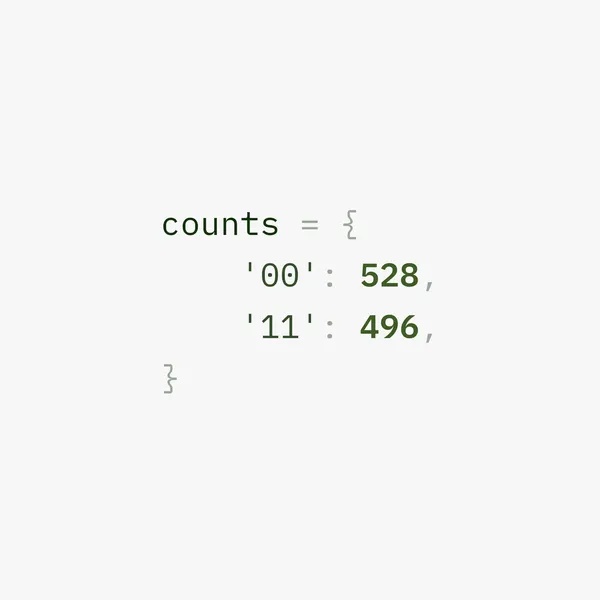
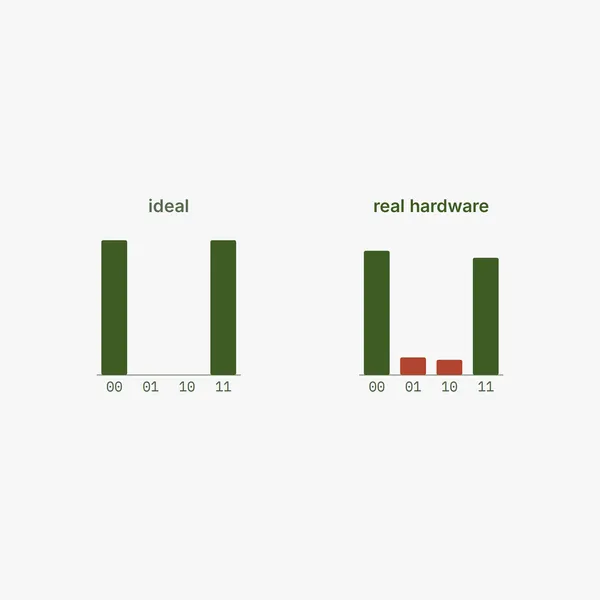
Then I started learning for real. I did the math, I built circuits, I ran a Bell state on an actual quantum computer and watched just over one percent of the answers come back impossible. And slowly I built a picture that is neither the hype nor its mirror image, the cynical "it is all a scam" take that is just as wrong. Here is that picture, honestly, with no marketing and no doom. This is where quantum computing actually is in 2026, what it genuinely cannot do, and why I still think it is worth starting now.
What NISQ actually means
If you learn one piece of vocabulary, learn this one, because it is the most honest three word summary of the entire present moment. We are in the NISQ era. Noisy Intermediate-Scale Quantum. Each word is doing real work.
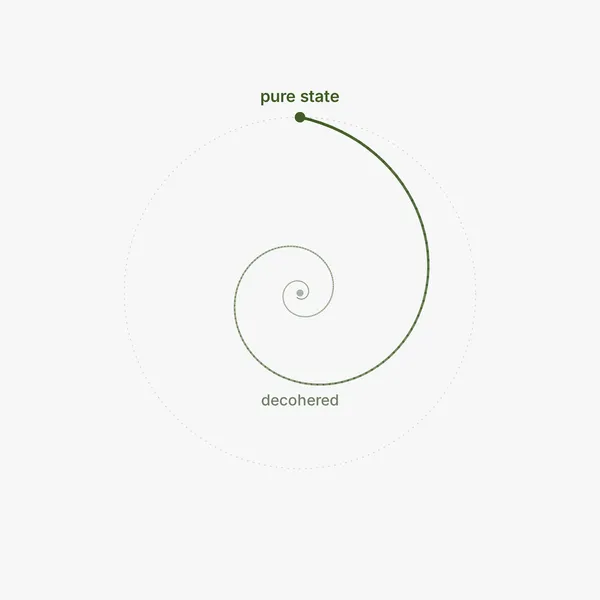
Noisy: the hardware makes errors, constantly, the way the hardware post and the decoherence post showed. Gates are imperfect, measurements misread, and the qubits forget their state on a timescale of microseconds. Every computation is a race against accumulating noise.
Intermediate-Scale: today's machines have on the order of hundreds of physical qubits. That sounds like a lot until you learn that the genuinely world changing applications need many thousands or millions of high quality ones. We have intermediate scale, not the scale that matters.
Quantum: it is real. These are genuine quantum machines doing genuine quantum things, entanglement and interference and all of it. Just constrained, hard to use, and noisy.
Put together, NISQ describes a technology that is real but not yet useful at scale, powerful in principle but hemmed in by noise and size in practice. In 2026 we are squarely inside this era. Not at the start of it, the hardware has improved a lot, but not out of it either. That is the ground truth everything else sits on.
What quantum genuinely cannot do today
Here is the part the hype skips, stated plainly, because being clear about the limits is where the honesty lives.
It will not break your encryption. This is the big one, the headline that scared everyone, and it is not happening soon. The algorithm that threatens current encryption needs to run deep, clean circuits on a vast number of high quality qubits. Recent estimates have actually brought the required number down, with one result suggesting it might take on the order of a million qubits rather than the tens of millions once assumed, but a million physical qubits running under error correction is still wildly beyond today's hundreds of noisy ones. The gap is not a quarter or two. It is years to decades, and anyone telling you your data is at risk this year is selling something.
Put a number on the gap.
# the encryption-breaking gap, in round numbers
qubits_today  = 1_000        # noisy physical qubits, a strong machine in 2026
qubits_needed = 1_000_000    # physical qubits under error correction, RSA-2048 (2025 estimate)

print(f"{qubits_needed // qubits_today}x more qubits, and the error corrected kind")   # 1000x
Run it. A thousandfold, and the real gap is worse than the number, because today's qubits are noisy while the million would have to run under error correction, which does not exist at that scale yet. That is why the honest estimate is years to decades, not quarters.
It is not a faster classical computer. Quantum will not speed up your website, your spreadsheet, your database, or almost any ordinary code you write. It is not a drop in upgrade that does everything faster. It is good at a narrow class of problems with a particular structure, and useless or worse than classical for the overwhelming majority of computing tasks. The mental image of a quantum chip that just makes all software faster is simply wrong.
It cannot run the famous algorithms at useful sizes. You can run Shor's algorithm to factor the number fifteen as a demo. You cannot run it on a number big enough to matter, because that needs depth and qubit counts and error rates that do not exist yet. Same for Grover and the rest. The algorithms are real and the small demonstrations work, but useful scale is not here.
There is no large scale error correction yet. The noise from the hardware posts is not currently being corrected away by error correction proper. The field knows how error correction should work in theory, and there are real laboratory demonstrations of the pieces, but a machine with enough stable, error corrected logical qubits to run a serious computation does not yet exist. This, more than raw qubit count, is the real bottleneck.
What is actually true and genuinely promising
Now the other side, because cynicism is as lazy as hype. Several things are real, improving, and worth taking seriously.
The field has pivoted from more qubits to better qubits. For years the headlines were a qubit count arms race, which was always a bit of a vanity metric. That has shifted. The number people now watch is the stability and fidelity of the qubits, and increasingly the performance of logical qubits, the error corrected kind. Gate fidelities have climbed to impressive figures on the best hardware, and that quality, not raw count, is the metric that actually moves the field toward usefulness. That shift in emphasis is healthy and real.
Hybrid quantum-classical is the realistic near-term path. Nobody serious expects a pure quantum computer to take over a whole problem soon. The pragmatic approach, and the one behind the variational algorithms that use the parameterised circuits from the pipeline post, is to do a small, hard, quantum specific core on the quantum machine and let classical computers handle everything around it. That hybrid shape is where near-term value, if it comes, will come from.
There are domains with the right shape. Quantum chemistry and materials science, simulating quantum systems with a quantum machine, certain optimisation problems, some areas of finance. These share a structure that fits what quantum is good at, they tolerate approximate answers, and they already fund real research programs. The promise here is narrow and early, but it is genuine, not vapour.
The roadmaps point somewhere real, if you read them right. The major players publish roadmaps targeting fault tolerant modules, machines that correct their own errors as they run, and logical qubits across the late 2020s and into the 2030s. I take these as aspirational direction, not promises, because timelines in this field have a long history of slipping. But the direction is real and the investment behind it is enormous.
A word on quantum advantage
You will hear the phrases quantum advantage and quantum supremacy, and they are worth pinning down because they get badly misused. Quantum supremacy means a quantum computer doing some task, any task, faster than the best classical computer can. It has been claimed and demonstrated, but the catch is enormous: the tasks chosen were contrived, designed specifically to be hard for classical machines and easy for quantum ones, with no practical use whatsoever. It was a milestone, a proof that the hardware can in principle outrun classical computing on something, and it was genuinely significant as a scientific marker. It was not a useful computation, and the goalposts have moved more than once as classical algorithms improved to claw back some of those claims.
What actually matters, and what the field is chasing now, is quantum advantage on a useful problem: a quantum computer solving something people genuinely care about, faster or better or cheaper than any classical approach. As of 2026 that is contested ground rather than a line cleanly crossed. The supremacy demonstrations proved the hardware can win a rigged race. Winning a race that matters, on a problem with real value, is the threshold the whole field is still working toward, and it is the one to watch. When someone claims quantum advantage, the only question worth asking is whether the problem was useful or contrived. Until recently the honest answer for every clean demonstration was contrived. Now a few practical claims have appeared, a modest edge on a niche simulation, a chemistry result, and the argument has shifted from whether there is any advantage to whether a given one truly counts, with none yet uncontested or broadly useful. The useful version is still ahead of us.
The realistic timeline, without pretending I know
So when does it get genuinely useful? Honestly, nobody knows, and anyone who gives you a confident year is guessing. The defensible shape is this. We are in NISQ now. Lab scale logical qubits are emerging and will mature over the next few years. Multi logical qubit, error corrected systems scale through the latter half of this decade if things go well. Production, broadly useful, fault tolerant machines are most plausibly a 2030s story, contingent on hard breakthroughs in materials, control, and software that may or may not arrive on schedule. And NISQ machines will not vanish when fault tolerant ones arrive, the two will coexist for years, the way older and newer computing paradigms always overlap.
Hold that loosely. It is a reasonable central estimate, not a prophecy, and the error bars are wide in both directions. The honest answer to "when" is "later than the hype says, and nobody can tell you exactly."
So why enter early
Given all that, why am I spending my evenings on this instead of waiting for the dust to settle? A few reasons, and they are the whole thesis of why I am doing this in public.
The learning curve is long, and you cannot cram it. The math, the linear algebra, the complex numbers, the intuition for phase and interference and entanglement, takes a year or more to build properly. It is not the kind of thing you absorb in a weekend once the useful hardware lands. If you want to be ready to do real work when the machines mature, the time to be climbing the curve is now, slowly, while there is no pressure. Being early here is not about the hardware. It is about the understanding.
Depth is the differentiator, and it is getting rarer. As AI makes shallow content cheap, and it absolutely does, the durable edge shifts to genuine understanding, the kind you cannot fake or generate. Quantum is a domain where that depth is scarce and valuable, where the gap between someone who has truly internalised the concepts and someone who has skimmed a few articles is enormous and obvious. Building that depth now, while it is still rare, compounds.
Being early on the right side. I am not betting on a quick payday. There may not be one for years, and I have made my peace with that. I am building a foundation in a hard, real field while the foundation is still uncommon, which is a very different bet from chasing the hype for a fast return. One is fragile. The other compounds quietly regardless of when the hardware catches up.
And the honest framing is itself the value. There is an ocean of breathless quantum content out there, and a smaller pool of pure cynicism, and very little that is calibrated, no hype, and clearly written by someone who actually did the math. That calibrated honesty is rare, and rare is valuable. Being the person who can tell you exactly what quantum can and cannot do, without the marketing, is worth something precisely because so few people bother.
There is also a quieter reason that is specific to coming from where I do. A lot of what surrounds quantum computing is not exotic physics at all, it is ordinary engineering wearing unfamiliar names, as the pipeline post and the version trap post argued: jobs, queues, compilation, parsing results, version management, working around an unreliable backend. If you already build software, a real fraction of the quantum stack is stuff you know, and that means your runway into the field is shorter than the hype, in either direction, lets on. You are not starting from zero. You are starting from a builder's toolkit plus a year of new math, which is a much friendlier place to begin than the marketing implies. That realisation kept me going more than once, and it is worth holding if you come to this with engineering already under your belt.
On the hype cycle itself
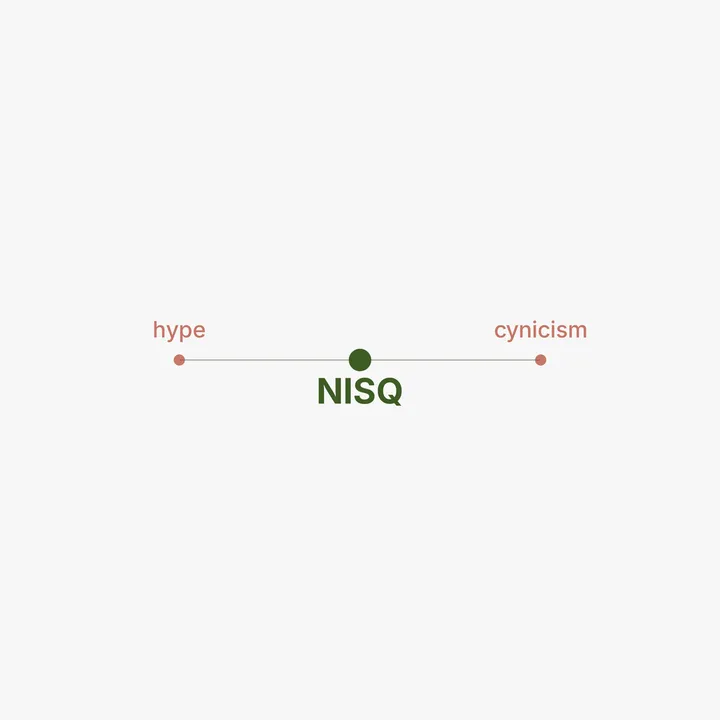
One last thought, because learning to hold this nuance is a skill in its own right. Both extremes are wrong. The "quantum changes everything tomorrow" crowd is wrong, and you should discount them. But the "it is all a scam, nothing works, it is decades of nothing" crowd is equally wrong, and you should discount them too. The truth is the uncomfortable middle: a hard, real, slow moving, genuinely promising technology in an early and limited era, advancing steadily, with the biggest payoffs still years out and not guaranteed. Resisting the pull of both the hype and the backlash, and just looking clearly at what is actually true, is one of the most useful habits you can build in any fast moving field. Quantum is just where I happen to be practising it.
A quick test before you move on
Close this and answer in your own words.
What do the three parts of NISQ each mean, and what does the phrase tell you about where the field is? If you cannot unpack noisy, intermediate scale, and quantum, reread the first section, because it anchors everything.
Someone tells you quantum computers will break encryption this year. What is your honest, calibrated response? If you cannot explain the gap between today's hundreds of noisy qubits and the million high quality ones it would take, revisit the limits section.
And what is the strongest honest reason to start learning quantum now, given that useful hardware is years away? If your answer is not something like the learning curve is long and depth is rare, reread the section on entering early, because that is the actual thesis.
Where I am learning the honest picture
Free, and worth seeking out the calibrated sources specifically. The term NISQ comes from a well known paper by John Preskill that is still one of the clearest framings of the era, and it is worth reading the source rather than the summaries. For the current state, I follow the research and the company roadmaps but read them sceptically, treating roadmaps as direction rather than schedule. The most useful calibration, though, came from doing the work myself, running circuits on real hardware and seeing the noise, because nothing deflates hype like watching a two gate circuit leak just over one percent of its answers. Experience is the best filter against marketing.
Why I am here, honestly
I am not learning quantum computing because it will make me rich next year. It almost certainly will not. I am not here because it will change the world by Tuesday, because it will not, and I have stopped finding that disappointing. I am here because it is a hard, real, genuinely interesting thing, sitting in an early and honest era, and understanding it deeply, now, while that understanding is still rare, is a bet I am happy to make regardless of when the hardware arrives.
No hype required. The truth is more interesting than the marketing anyway, and a great deal more durable. The field does not need me to believe the breathless version. It just needs me to keep doing the math, run the circuits, watch the noise, and tell you honestly what I find. That is the whole job, and it is enough.